
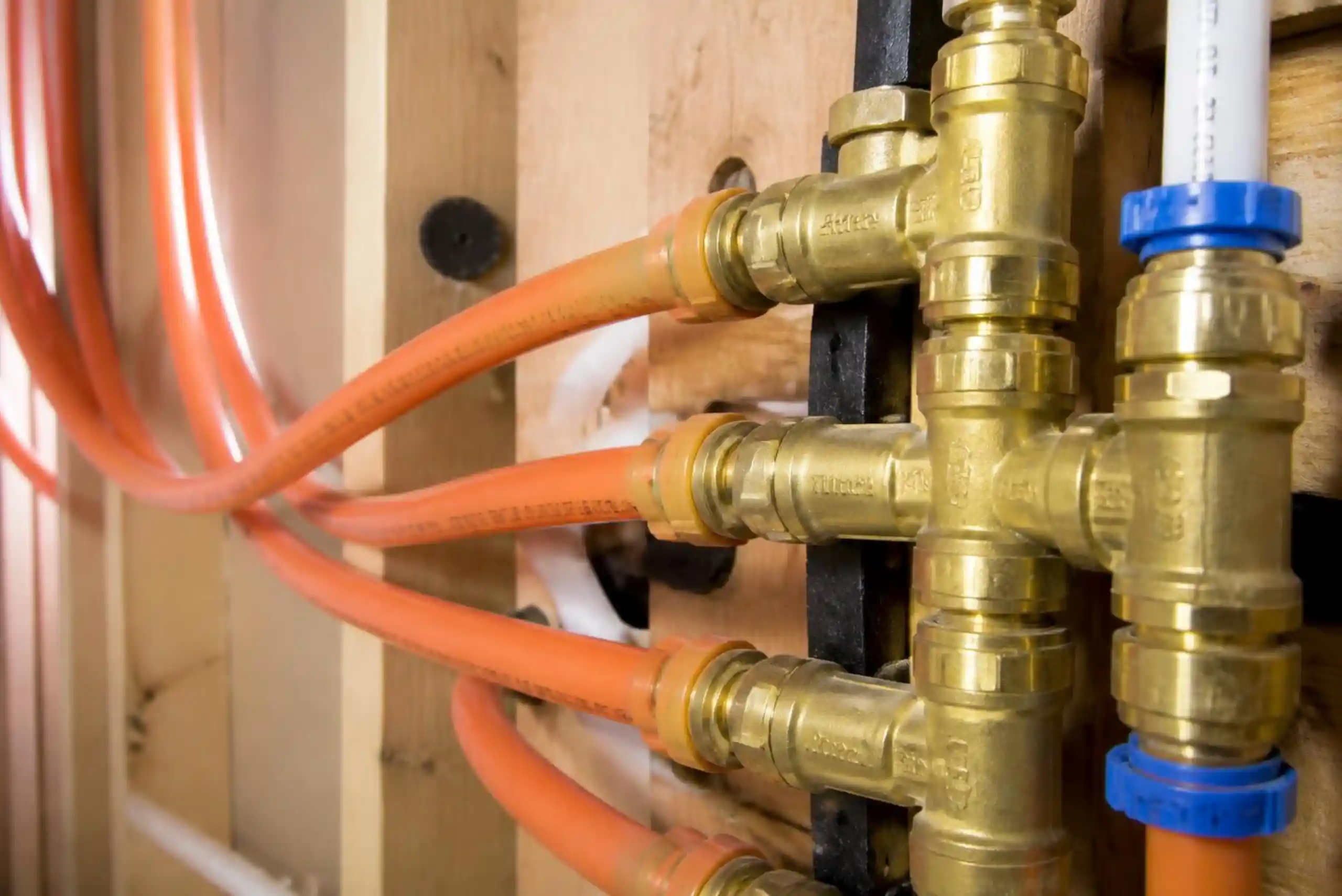
Kitec pipe is most easily recognized by its bright orange and blue flexible piping, often with visible brand names printed along the length. Hot water lines are typically orange or red, while cold water lines are blue, and the system usually includes brass fittings that may carry specific markings.
Basic appearance
Kitec is a flexible, multilayer piping system made of plastic with a thin aluminum core. It was installed in many homes and buildings from the mid 1990s to the mid 2000s as a lower-cost alternative to copper.
The most common visual features are:
- Bright orange or red pipes for hot water and radiant heat.
- Bright blue pipes for cold water.
- Flexible tubing that bends more easily than rigid copper or PEX.
- Printed text along the pipe that may include “Kitec” or related brand names.
These colours are the first clue, but they are not the only way to confirm the pipe type.
Markings and brand names
Kitec piping often carries printed labels that help identify it. In many homes, you will see one or more of the following names on the pipe:
- Kitec
- Kitec XPA
- IPEX AQUA
- PlumbBetter
- WarmRite
- AmbioComfort
- KERR Controls
- XPA
- Plomberie Améliorée
The presence of these names, combined with the orange and blue colours, strongly suggests Kitec plumbing.
Fittings and electrical panel clues
The fittings used with Kitec are another important identifier.
- Kitec systems typically use brass fittings.
- Fittings may be stamped with “Kitec,” “KTC,” “CSA B137.9/10,” or “ASTM F1974.”
- Some homes have a yellow warning sticker inside the electrical panel door noting non-metallic interior water piping, because the system cannot be used as an electrical ground.
Finding these fittings or stickers in a home with orange and blue piping adds further confirmation.
Where to look in your home
Because most plumbing is hidden in walls and floors, you need to check exposed sections.
Best places to inspect include:
- Near the water heater or boiler.
- In mechanical rooms or utility closets.
- Under kitchen and bathroom sinks where pipes exit the wall.
- Around washing machine connections or other accessible runs.
These areas often show the pipe colour, markings, and fittings clearly enough to identify the system.
Why identification matters
Kitec plumbing has been associated with a higher risk of failures and leaks over time. Many homeowners choose to replace it as a preventive measure, and insurers often ask about its presence during underwriting.
Being able to recognize Kitec by sight helps owners, buyers, and property managers make informed decisions about inspections, repairs, and long-term planning.
FAQ
Is all the orange and blue pipe Kitec?
Not necessarily, but orange and blue flexible piping is a strong indicator that you should look closer at markings and fittings.
Can Kitec be other colours?
Yes. Some Kitec systems were also sold in grey, black, or red, though orange and blue are the most common.
What if I cannot see any markings?
If the pipe is unmarked but matches the typical colours and fitting style, it is wise to have a qualified plumber confirm the type.
Where is Kitec most likely to be visible?
Near the water heater, under sinks, and in mechanical rooms where pipes are exposed.
Does Kitec affect insurance?
Many insurers ask about Kitec and may adjust terms or require replacement in some cases.
Identify your plumbing with confidence
Knowing what Kitec pipe looks like helps you spot potential issues early and plan appropriate next steps. Clear identification is the first move toward managing risk and protecting your home from future plumbing failures. Reach out to Canyon Properties to protect your home.