
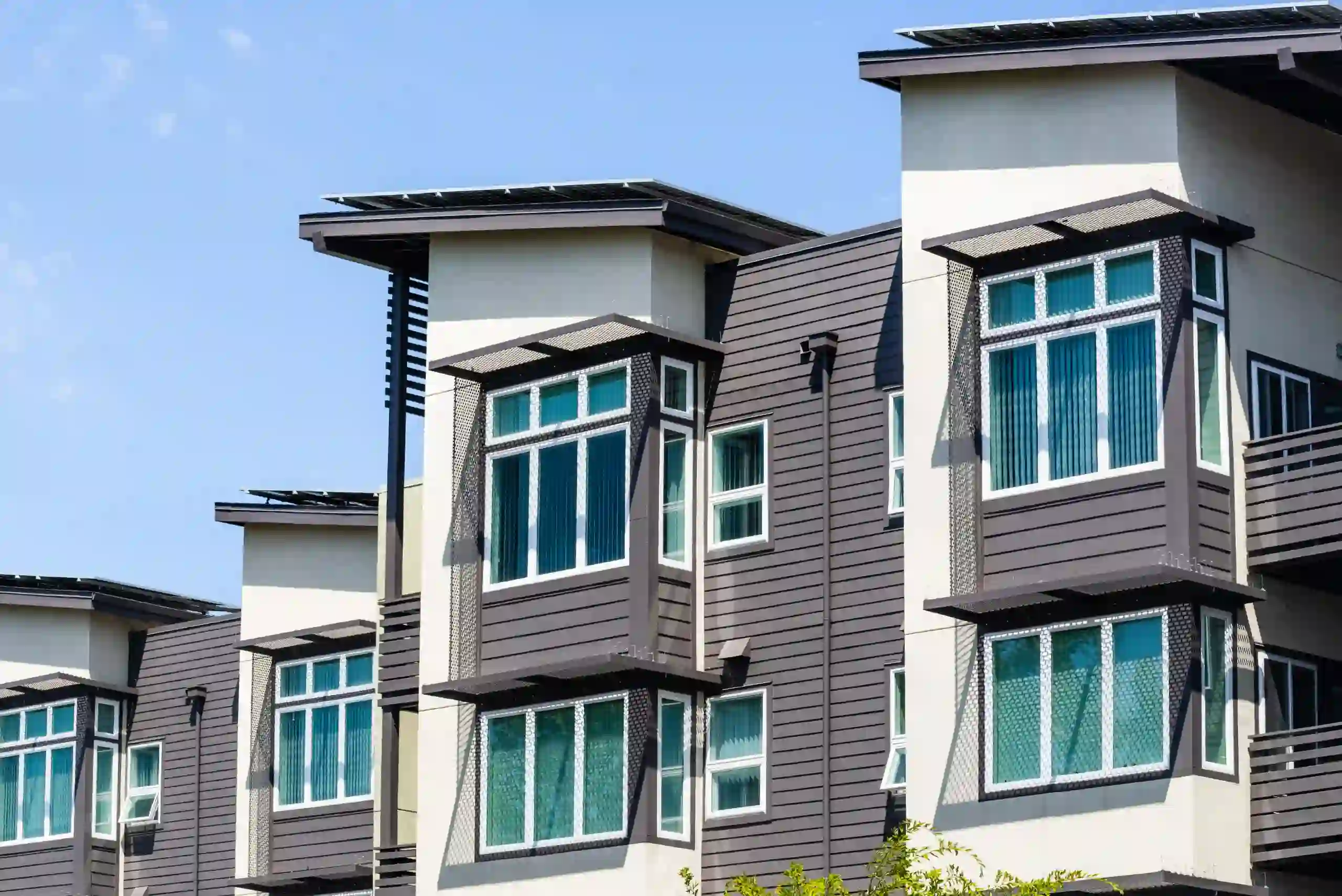
A building envelope is everything that separates the inside of a building from the outside environment. It includes the roof, exterior walls, windows, doors, foundation, and insulation, all working together to keep weather, moisture, and noise out while keeping conditioned air in.
The basic idea
You can think of the building envelope as the protective shell of a structure. It controls how air, heat, cold, sun, and water move in and out of the building, and it helps support the structure while shaping the way the property looks.
A well-designed envelope makes indoor spaces more comfortable, quieter, and more energy efficient. When the envelope is weak or damaged, problems like drafts, condensation, leaks, and higher utility bills become much more common.
Main parts of a building envelope
Every envelope is made up of familiar components that work together as a single system.
- Roof and attic structure. Keeps rain and snow out and helps control heat gain or loss.
- Exterior walls and cladding. Provide support, weather protection, and a finished look.
- Windows and exterior doors. Let in light and access while controlling air and heat movement.
- Foundation, slabs, and below-grade walls. Connect the building to the ground and manage moisture from the soil.
- Insulation and air barriers. Help control temperature and limit unwanted drafts.
When these elements are properly connected and sealed, the envelope acts like a continuous protective layer around the building rather than a set of separate parts.
What the envelope actually does
A strong building envelope delivers three main functions.
- Structural support
Exterior walls, foundations, and roof components help carry and transfer loads safely. The envelope must be strong enough to handle wind, snow, and everyday forces without failing. - Climate and moisture control
The envelope limits uncontrolled air movement, reduces heat loss or gain, and helps keep moisture from entering where it can cause mould or rot. It also plays a big role in how easy a building is to heat and cool. - Appearance and identity
Because the envelope includes visible surfaces, it defines the building’s exterior look. Materials, colours, and detailing all live on the envelope and contribute to curb appeal.
If any of these functions are weak, the building can feel uncomfortable, look tired, or develop damage that is expensive to repair.
Tight vs loose envelopes
You will often hear people describe envelopes as “tight” or “loose.”
- A tight envelope has very few uncontrolled air leaks. It relies on good insulation, continuous air barriers, and sealed gaps around windows, doors, and service penetrations.
- A loose envelope allows more outside air to move in and out through cracks, gaps, and poorly sealed joints.
Tight envelopes give better control over indoor temperature and humidity, which usually means lower heating and cooling costs and fewer moisture problems. Loose envelopes can feel drafty and may let in unwanted dust, noise, or pollutants. They can also make mechanical systems work harder than they should.
Why building envelopes matter for owners
For owners and managers, the building envelope is where comfort, energy performance, and long term durability meet.
A healthy envelope can:
- Reduce energy use and utility costs.
- Improve comfort by limiting drafts and cold spots.
- Help control condensation and moisture-related damage.
- Support better indoor air quality by reducing uncontrolled infiltration.
- Extend the life of finishes, framing, and mechanical systems.
Older structures, or properties with worn siding, outdated windows, and patchy insulation, often benefit most from envelope upgrades. In many renovation projects, improving the envelope is one of the most effective ways to protect the building and make it perform like a newer property.
FAQ
**What exactly counts as the building envelope?**Everything that separates inside from outside: roof, exterior walls, foundation, insulation, windows, and exterior doors.
**Is the building envelope only about energy efficiency?**No. It also affects structure, moisture control, comfort, noise, and the overall appearance of the building.
**Why do older buildings have more envelope problems?**They were built to older standards and may have less insulation, more air leaks, and aging materials that no longer perform well.
**Can small repairs improve the envelope?**Yes. Sealing gaps, improving insulation, repairing flashing, and upgrading windows can all strengthen the envelope.
**Do interior renovations affect the envelope?**They can, especially if they involve exterior walls, window changes, or roof penetrations. That is why envelope details should be considered in renovation planning.
Think of your building as a system
The building envelope is not just a layer of materials. It is a system that controls how your property interacts with the weather and climate every day. When it is designed and maintained thoughtfully, it protects your investment and makes every interior upgrade work better.
Visit Canyon Property Projects at 3025 Lougheed Hwy #430, Coquitlam, BC V3B 6S2
Phone: (604) 332-6792
Email: [email protected]
Book your consultation today and start planning a bathroom that fits your condo and your daily routine.